

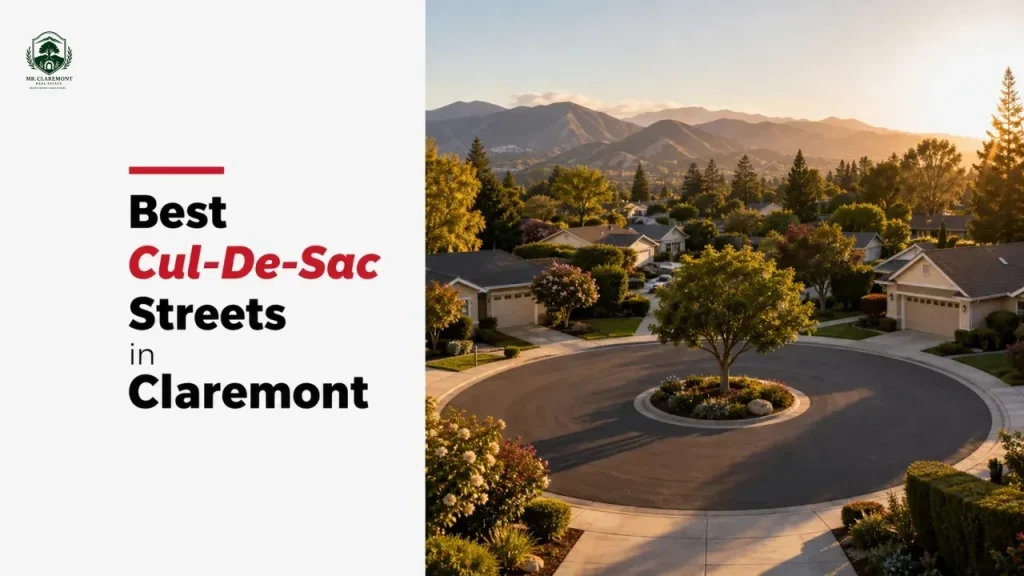
If you’re looking for the best cul-de-sac streets in Claremont, the strongest options are usually found in North Claremont and the foothill-adjacent neighborhoods, where low-through streets, larger lots, and a quieter residential feel tend to come together. In practice, buyers usually care less about the exact street label and more about the mix of privacy, traffic flow, school access, and proximity to parks, trails, and The Village. (mrclaremont.com, claremontca.gov, buyandsellwithbrenda.com)
Which parts of Claremont have the best cul-de-sac streets?
North Claremont, Claraboya, and select interior pockets near Piedmont Mesa generally offer the best cul-de-sac living in Claremont because those areas were built with more loops, interior streets, and lower-traffic residential layouts than the older grid neighborhoods closer to downtown. That usually translates into less pass-through traffic and a more tucked-away feel.
Claremont’s street patterns change as you move north. Older central areas near The Village and the Claremont Colleges lean more toward a traditional grid, while later-built neighborhoods farther north show more loop-and-cul-de-sac planning. That matters for buyers who want quieter blocks, easier bike riding for kids, or just fewer cars cutting through at commute hours.
From what buyers usually notice first, the best pockets tend to sit away from the busiest corridors like Foothill Boulevard, Base Line Road, Indian Hill Boulevard, and major stretches of Mountain Avenue. A home can have a Claremont address and still feel very different block by block. That’s normal here.
What makes a cul-de-sac street especially desirable in Claremont?
The best cul-de-sac streets in Claremont usually combine low traffic, useful lot shape, good walkability to neighborhood amenities, and strong access to schools, parks, or foothill recreation. A quiet street alone isn’t enough if the house backs to a busy road or sits far from the places you’ll use every week. (claremontca.gov, mrclaremont.com)
In Claremont, lifestyle details matter a lot. Some buyers want fast access to Claremont Hills Wilderness Park for early-morning hikes. Others care more about being close to Condit Elementary, El Roble Intermediate, or Claremont High School. And some simply want a calmer setting within a short drive of restaurants and coffee in The Village. (claremontca.gov, dlenetwork.com)
A simple example: two homes may be similar in size and price, but the one on an interior cul-de-sac near a neighborhood park will often feel more private day to day than a house on a straighter collector street. That’s the sort of micro-location issue that comes up constantly when people buy a home in Claremont. (dlenetwork.com, claremontca.gov)
Which Claremont neighborhoods are the strongest fit for cul-de-sac buyers?
For most buyers, Claraboya, North Claremont, and selected northeastern pockets stand out because they offer a quieter residential pattern, foothill adjacency, and a stronger chance of finding loop-and-cul-de-sac layouts than central Claremont’s older tree-street sections. The tradeoff is that inventory can be tighter and turnover lower. (buyandsellwithbrenda.com, dlenetwork.com, iloveclaremontca.com)
Claraboya is often the first place buyers mention when they want views, larger lots, and a little more separation from busier parts of town. It’s one of the foothill markets in Claremont where street position and lot orientation can change the feel of the property in a big way.
North Claremont also draws steady interest from buyers who want established homes, quieter interior streets, and easier access to local routes without living directly on them. If you’re moving to Claremont from a denser part of Los Angeles County, this part of town often feels immediately calmer. (dlenetwork.com, michellehomesellingteam.com)
Here’s a practical comparison:
| Area in Claremont | Why buyers like it | Best for | Watch-outs |
|---|---|---|---|
| Claraboya | Foothill setting, larger lots, quieter feel | Privacy, views, move-up buyers | Lower turnover, some streets less walkable to downtown |
| North Claremont | Interior residential streets, established homes | Families, long-term buyers, school access | Values can vary a lot by micro-location |
| Tree Streets / Central Claremont | Classic charm, close to The Village and colleges | Walkability, older architecture, dining access | More grid layout, fewer cul-de-sac options |
| Northeast pockets near local parks | Neighborhood feel, access to open space | Buyers wanting quiet without full foothill pricing | Inventory can be limited |
Are cul-de-sac homes better for families, pets, and day-to-day living?
They can be, especially for households that value less through traffic, a little more breathing room, and a street where outdoor activity feels easier. But “better” depends on your priorities. In Claremont, some buyers would still choose a walkable central neighborhood over a cul-de-sac if they want quicker access to downtown shops, restaurants, and events. (mrclaremont.com, claremontca.gov)
For families, the appeal is pretty easy to understand: slower traffic, a more contained street pattern, and often a stronger neighborhood feel. For dog owners, lower-traffic streets can make everyday walks less hectic. And for people working from home, quieter blocks may simply feel more comfortable over time.
Still, not every cul-de-sac is equal. One may back to open space or sit near June Vail Park, while another may have more parking pressure or less shade. Claremont is known for parks, trails, and neighborhood green space, so the best street is often the one that matches how you actually live. The city highlights dozens of parks, including Griffith Park and June Vail Park, plus access to Claremont Hills Wilderness Park. (claremontca.gov)
What local places matter when choosing a cul-de-sac street in Claremont?
The most useful local reference points are The Village, Claremont Hills Wilderness Park, neighborhood parks, school campuses, and your main commute route out of town. In a place like Claremont, a peaceful street can lose some appeal if everyday errands require too much backtracking. (claremontca.gov, wikipedia.org)
Buyers often weigh whether they want easier access to Foothill Boulevard, Base Line Road, the 210 Freeway area, or foothill recreation. If you’re heading to Upland, La Verne, Pomona, or Rancho Cucamonga regularly, that access pattern matters more than people expect at first. A house can be beautiful, but a clunky daily route gets old fast.
And then there’s the lifestyle side. Being near The Village means quick access to local dining, coffee, bookstores, and community events. Being farther north may mean more quiet, more views, and better trail access. Neither is automatically better. It’s a fit question.
How should buyers evaluate a specific cul-de-sac before making an offer?
The smartest approach is to visit the street at different times of day, drive the route to your usual destinations, and look beyond the listing photos. In Claremont, the difference between a great cul-de-sac and a merely decent one often comes down to traffic patterns, parking, lot placement, and what sits behind or beside the property. (dlenetwork.com, claremontca.gov)
Try this quick checklist:
- Visit once in the afternoon and once in the early evening.
- Check how quickly you can reach Foothill Boulevard, Base Line Road, or your work route.
- Look at parking overflow from nearby schools, parks, or trailheads.
- Notice whether the home backs to a busy edge, drainage area, or slope.
- Walk the block to see if it feels connected or isolated.
One Claremont-specific example: areas near popular trail access can feel wonderfully close to nature, but some streets may also experience more visitor parking pressure on weekends. That doesn’t make them bad choices. It just means you should know the pattern before you commit. (claremontca.gov)
Do cul-de-sac homes hold value well in Claremont?
In many cases, yes, because low-traffic interior locations are consistently attractive to buyers. Still, value in Claremont depends on more than street shape. Condition, lot size, school access, foothill setting, and proximity to either busy roads or local amenities can all matter just as much. (realtor.com, dlenetwork.com, buyandsellwithbrenda.com)
Claremont tends to reward homes with strong neighborhood feel and clear lifestyle appeal. A well-kept house on a good cul-de-sac in North Claremont or Claraboya may attract steady interest because those areas line up with what many buyers are already looking for: quiet, space, and a distinct sense of place.
That said, don’t assume every cul-de-sac home has a premium. Some have awkward pie-shaped lots, limited backyard usability, or less convenient access to schools and shopping. A good Claremont real estate agent will compare not just sales, but street context.
If you’re trying to sort out which Claremont streets truly fit your goals, a local street-by-street review can save a lot of time. The right answer usually isn’t “the fanciest area.” It’s the block that matches your routine, budget, and what you want daily life to feel like. If you’d like help narrowing down homes for sale in Claremont or comparing specific neighborhoods, reach out to Mr. Claremont for a practical, no-pressure conversation.