

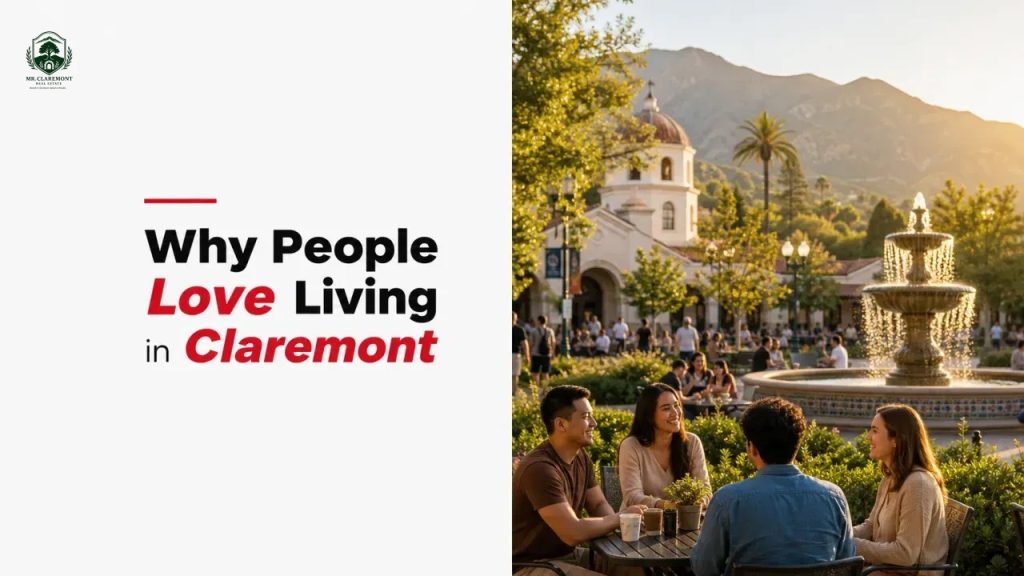
Claremont, California, has a rare mix that’s hard to fake: a true small-town feel, beautiful tree-lined streets, strong schools, real walkability, and easy access to the rest of Southern California. People love living in Claremont because it feels calm and established, yet still active, social, and connected.
If you’re thinking about moving to Claremont, buying a home in Claremont, or just trying to understand why demand stays strong here, the short answer is simple. Claremont offers college-town energy, historic charm, a lively downtown Village, outdoor space, and a housing market that continues to hold value. The City of Claremont describes itself as a community of about 35,000 residents with 140 acres of developed parks, deep ties to the Claremont Colleges, and a historic downtown known as the Village. Redfin reports a Claremont median sale price around $1.1 million as of mid-2026, while Zillow places average home value just over $1.03 million with homes going pending in about 25 days.
What makes Claremont feel different from other Inland Empire and San Gabriel Valley cities?
Claremont feels different because it was shaped around education, architecture, and public space instead of pure sprawl. You notice it pretty quickly: mature trees, older custom homes, quiet streets, and a downtown that people actually use on foot instead of just driving through.
The city sits about 30 miles east of Los Angeles and is closely associated with the Claremont Colleges, a consortium of five undergraduate and two graduate institutions. That academic presence gives the city a thoughtful, well-kept feel. Even locals use the nickname “the City of Trees and PhDs,” a phrase highlighted by the Claremont Colleges themselves. (claremontca.gov) (claremont.edu)
There’s also a stronger sense of identity here than in many nearby communities. Claremont has long protected its character through preservation, planning, and design review. So while nearby cities like Pomona, Upland, La Verne, and Rancho Cucamonga all have their own appeal, Claremont tends to attract people who want a quieter, more established environment with a little personality.
A lot of buyers say the same thing after one afternoon here: “It just feels different.” And honestly, that’s fair.
Why do so many people love the Claremont Village?
The Claremont Village is one of the biggest reasons people love living in Claremont because it gives the city a real center. It’s not a strip mall version of a downtown. It’s a walkable district where people eat, shop, grab coffee, catch a movie, and run into neighbors.
The City of Claremont identifies the Village as its historic downtown, and Discover Claremont highlights more than 70 locally owned restaurants, grills, and specialty food businesses in the area. That concentration of independent businesses matters. It gives residents options without making the area feel overly commercial. (claremontca.gov) (discoverclaremont.com)
For daily life, that means simple things become better. Dinner doesn’t have to mean a long drive. A coffee run can turn into a walk. Meeting friends feels easy. And if you commute, the Metrolink station in the Village adds another practical benefit for trips into other parts of Southern California. (claremont.edu)
For buyers who care about lifestyle as much as square footage, this part of town carries real weight.
Is Claremont a good place for families and schools?
Yes, Claremont is widely seen as a strong choice for families because it combines neighborhood stability, parks, and a well-defined public school system. Parents who want a community feel often put Claremont high on their list for exactly that reason.
Claremont Unified School District says it includes 7 elementary schools, 1 middle school, 2 high schools, and an adult school. That kind of city-centered district is a big draw for households that want clear school pathways without feeling lost in a massive system. (cusd.claremont.edu)
Beyond public schools, Claremont also has recognized private options, including The Webb Schools, and it benefits from the educational culture created by the Claremont Colleges. Even if your kids are years away from college, that environment shapes the city. Libraries, arts events, lectures, and student-centered programs become part of everyday life.
Families also tend to like the pace. Streets feel more residential. Parks are spread throughout the city. And the overall atmosphere is more neighborly than rushed.
What outdoor spaces and parks make Claremont so livable?
Claremont is especially livable for people who want easy access to green space, local parks, and foothill scenery. You don’t have to plan a whole weekend around getting outside. In many parts of the city, it’s just part of the normal routine.
The Claremont Colleges note that the city has a 2,000-acre Claremont Hills Wilderness Park along with miles of trails and bike lanes. The city also reports 140 acres of developed parks, and its parks directory includes neighborhood spaces such as Griffith Park and others spread across town. (claremont.edu) (claremontca.gov)
Then there’s the California Botanic Garden, one of Claremont’s standout local assets. It adds another layer to the city’s appeal, especially for residents who value native landscapes, seasonal beauty, and quiet places to walk.
Here’s a simple snapshot of the lifestyle draw:
| Place | Best For | Why Locals Like It |
|---|---|---|
| Claremont Hills Wilderness Park | Hiking and views | Big trail network near the foothills |
| Claremont Village | Dining and errands on foot | Walkable, social, and locally owned |
| California Botanic Garden | Relaxed outdoor time | Beautiful native plant setting |
| Neighborhood parks | Family routines | Easy play space and casual recreation |
That balance matters. Claremont doesn’t just have homes. It has places where people actually spend their time.
How does the Claremont housing market support long-term appeal?
Claremont’s housing market supports its popularity because demand stays steady, inventory is limited, and the city has a reputation for holding value well. Buyers aren’t just purchasing a house here. In most cases, they’re buying into a specific lifestyle that isn’t easy to duplicate nearby.
As of mid-2026, Redfin reports a median sale price of about $1.1 million in Claremont, up 2.4% year over year. Zillow reports an average home value of $1,037,849, up 2.3% over the past year, with homes going pending in roughly 25 days. Realtor.com describes Claremont as a warm market, with homes selling in a median of 37 days and roughly at asking price on average in June 2026. (redfin.com) (zillow.com) (realtor.com)
That doesn’t mean every part of the market moves the same way. Price, condition, school area, and proximity to the Village all matter. But overall, Claremont home values reflect a city people actively want to live in.
What kinds of buyers are usually drawn to Claremont?
Claremont tends to attract buyers who want character, community, and a stronger day-to-day lifestyle than they’d get in a more generic subdivision. It appeals to different age groups, but they often want similar things: charm, convenience, and a place that feels rooted.
You’ll see interest from professors, healthcare professionals, remote workers, families, downsizers, and buyers moving east from pricier parts of Los Angeles County. Some want historic homes near the Village. Others want larger lots, foothill views, or quieter residential pockets.
Claremont also draws people who care about culture. The colleges, lectures, performances, gardens, and local businesses create more texture than you find in many suburban markets. That doesn’t show up neatly in a spreadsheet, but it definitely shapes demand.
And for some buyers, it’s as practical as this: they want a nicer daily routine. Better walks. Better coffee spots. Better streets. Claremont delivers on that.
Is Claremont a good fit if you want both calm neighborhoods and regional access?
Yes, that’s one of Claremont’s strongest selling points. You get a calmer, more residential setting, but you’re not cut off from jobs, major shopping, airports, or the broader Southern California region.
Claremont sits near the eastern edge of Los Angeles County, making it a useful location for people connected to the San Gabriel Valley, Inland Empire, or downtown Los Angeles. The Metrolink station in the Village adds flexibility, and road access makes nearby cities like Upland, La Verne, Pomona, San Dimas, and Rancho Cucamonga easy to reach. (claremontca.gov) (claremont.edu)
That combination is hard to find. Some cities feel convenient but hectic. Others feel peaceful but isolated. Claremont usually lands in the sweet spot between the two.
Should you move to Claremont if lifestyle matters as much as the house itself?
If lifestyle is high on your list, Claremont is absolutely worth a serious look. People love living in Claremont because the city gives them more than a home address. It gives them a setting that feels intentional, established, and enjoyable on an ordinary Tuesday, not just on weekends.
From the Village to the parks, from the schools to the foothill backdrop, Claremont has a consistency that buyers notice right away. If you’re comparing the best neighborhoods in Claremont, looking at homes for sale in Claremont, or trying to decide whether this market fits your goals, working with a local Claremont real estate agent can help you narrow the right area and price point.
If you want help buying a home in Claremont or figuring out which part of the city fits your lifestyle, reach out to Mr. Claremont for local guidance before the right listing gets away.