
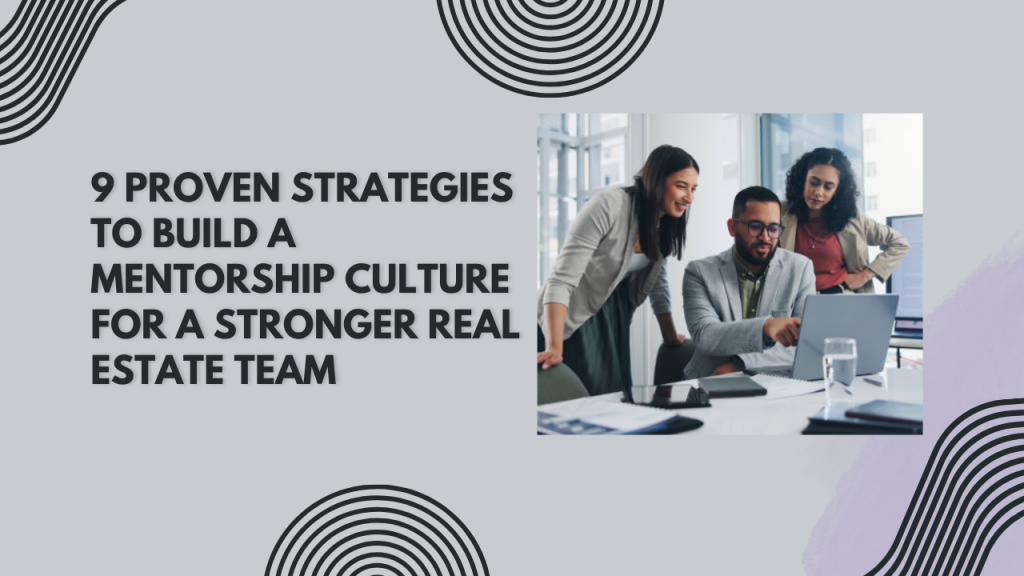
Agent retention in real estate teams hinges on the strength of their mentorship culture.
Mentorship is more important today than ever before. Agents face increasing operational complexity due to evolving market conditions, emerging technologies, and rising consumer expectations. At every career stage, agents need guidance, support systems, and a sense of belonging to achieve long-term success.
Real estate teams that prioritize mentorship programs benefit from improved performance, higher retention rates, and a culture rooted in growth and collaboration. The best part? Any team can integrate mentorship without major operational overhauls.
This article outlines actionable steps to build mentorship into your team’s operations—from onboarding new agents to ongoing development and leadership alignment.
1. Align Mentorship with Your Team’s Vision
Before creating a mentorship program, define what mentorship means for your unique team culture. Every brokerage has different goals, values, and priorities—your mentorship program should reflect those.
Start by identifying your core objectives:
-
Improve new agent onboarding and training
-
Foster relationships between experienced and entry-level team members
-
Provide clear career advancement paths
-
Strengthen collaboration and cultural cohesion
Connect your mentorship goals to your team’s mission and core values. For example, if your values include integrity, innovation, and community involvement, mentorship should reflect these traits. Encourage mentors to share how they’ve navigated difficult deals with integrity or involve mentees in local events and initiatives.
Make mentorship part of your everyday team culture—not an isolated program. Talk about its benefits regularly in team meetings, emails, and 1:1 conversations. When agents see how mentorship contributes to their success, they’re more likely to participate fully.
2. Lead by Example to Build Trust
For mentorship to take root, it must be championed by leadership. When team leads, brokers, and senior agents model mentorship behaviors, they signal that learning and growth are non-negotiable parts of the team culture.
Leadership should:
-
Mentor new agents during meetings and open houses
-
Participate in reverse mentorship to gain fresh perspectives
-
Encourage vulnerability by sharing past mistakes and lessons learned
This builds psychological safety—critical in a high-stakes industry where agents may feel pressure to appear flawless. When leaders normalize openness, mentorship relationships flourish, and agents feel safe to grow and ask questions.
3. Create a Structured Mentorship Framework
While organic mentoring relationships can be valuable, sustainable mentorship requires structure.
Start with intentional mentor-mentee matching. Don’t base pairings solely on tenure—consider communication styles, strengths, and goals to ensure alignment.
Define the mentorship timeline and cadence:
-
Schedule weekly, biweekly, or monthly meetings
-
Set a formal duration (e.g., 90 days, 6 months, or 1 year)
-
Outline clear roles and responsibilities for both mentors and mentees
Mentors should focus on offering guidance, not solving problems. Mentees should come prepared with questions, progress updates, and goals. These expectations keep the relationship focused and productive.
Structure transforms mentorship from a feel-good initiative into a powerful engine for growth and performance.
4. Train and Support Your Mentors
Even experienced agents need training to become great mentors. Mentoring is a skill—one that improves with education, practice, and support.
Begin by offering foundational mentor training:
-
One-time workshops or video tutorials
-
Written guides on feedback techniques, boundary-setting, and adapting to different learning styles
Then provide ongoing support:
-
Host regular mentor check-ins
-
Create dedicated chat groups or mentor roundtables
-
Offer opportunities to share experiences, challenges, and solutions
Recognition also matters. Celebrate mentor contributions publicly—through shoutouts in meetings, small rewards, or internal newsletters. This reinforces mentorship as a respected and vital part of your team culture.
5. Integrate Mentorship into Onboarding—and Beyond
New agents benefit most from early support. Assign a mentor during onboarding to help them apply what they’ve learned in training and feel connected to the team.
A good mentor doesn’t need to be a manager. Often, a peer-level agent who understands the systems and day-to-day processes is the most effective. This person can guide new agents through practical challenges like scripts, client management, and daily workflows.
Schedule check-ins at 30, 60, and 90 days to assess progress, address obstacles, and reinforce the mentorship connection. Both parties should prepare for these check-ins with progress summaries and discussion points.
Importantly, mentorship should continue after onboarding. Offer both formal and informal mentorship opportunities through:
-
Shadowing sessions
-
Co-hosted workshops
-
Collaborative deal reviews
This creates a supportive environment for agents at all stages of their careers.
6. Foster Daily Learning and Team Collaboration
Mentorship shouldn’t be confined to scheduled sessions. To fully integrate mentorship into your culture, create everyday opportunities for learning and collaboration.
Practical ideas include:
-
Knowledge-sharing sessions during team meetings
-
Peer-led chats over coffee to discuss marketing, negotiation, or lead generation strategies
-
Reverse mentoring where newer agents share insights on social media, tech tools, or emerging trends
Use internal communication platforms (e.g., Slack, group texts, shared forums) to create open spaces for ongoing support and celebration.
Highlight wins—like when a mentor helps a mentee close their first deal or a mentee introduces a new client engagement idea. These stories inspire others and validate the value of mentorship.
7. Promote Continuous Professional Development
A thriving mentorship culture is one that supports lifelong learning.
Provide easy access to training and development opportunities:
-
Sponsor workshops, webinars, or certifications
-
Fund continuing education
-
Offer in-house training programs led by experienced team members
Encourage agents to pursue credentials in luxury home marketing, buyer representation, or commercial real estate—even if not immediately required. These skills elevate both the individual agent and your team’s collective reputation.
Foster a growth mindset by framing challenges as learning opportunities. Leaders and mentors should model this by sharing their own experiences with failure, growth, and perseverance.
8. Set Goals and Measure Progress
For mentorship programs to evolve, they must be measurable.
At the start of each mentorship relationship, set shared goals such as:
-
Completing a certain number of transactions
-
Mastering a CRM or lead generation system
-
Improving listing presentation or negotiation skills
Schedule regular progress check-ins to evaluate milestones, address challenges, and adjust strategies. Use reflection worksheets or brief surveys to keep things simple yet effective.
Once a mentorship cycle concludes, gather feedback:
-
What worked well?
-
What could be improved?
-
What resources were missing?
Anonymous surveys often yield the most honest responses. Use that data to refine mentor selection, training, and timelines.
When agents know the program is actively evolving, they’ll remain engaged and invested.
9. Let Mentorship Shape Your Culture—and Business
Building a mentorship culture takes intention and time—but the return is undeniable. Real estate teams with strong mentorship programs see higher agent satisfaction, stronger performance, and better retention.
Change doesn’t happen through one big initiative. It’s built through small, consistent actions. Start by:
-
Aligning mentorship with your team vision
-
Providing structured mentorship systems
-
Offering mentor training and daily collaboration opportunities
-
Celebrating growth and learning at every level
When mentorship becomes a natural part of your daily operations, you’ll not only retain great agents—you’ll build a team that thrives together.
Unlock the secrets to realtor success by overcoming common challenges with proven solutions! Visit DLE Network for more information.
Explore more about Building local loyalty: how to become the real estate agent everyone knows (and recommends)