

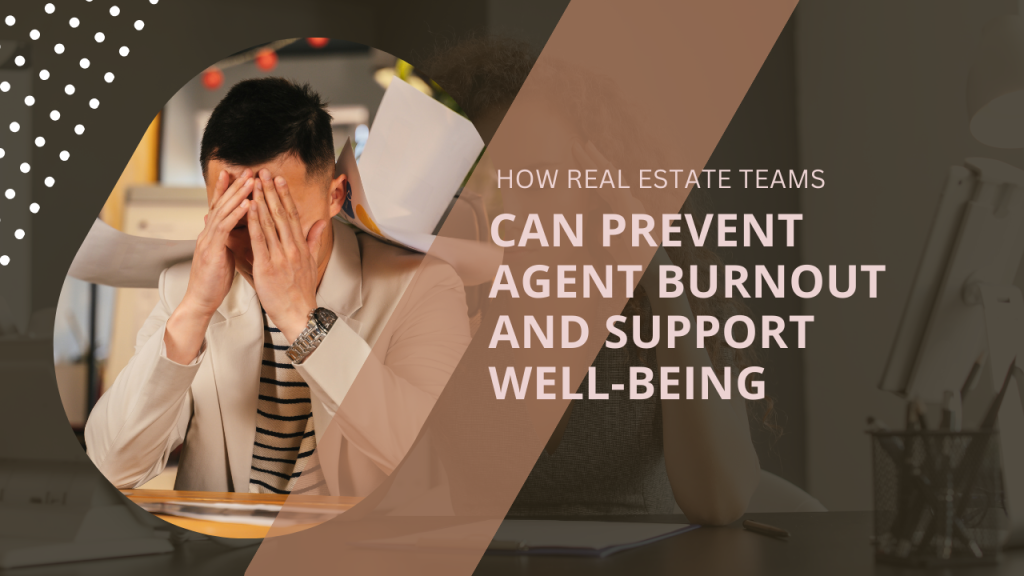
The competitive nature of markets creates an intense environment that forces successful agents to reach their maximum capacity in pursuit of new deals. While many agents achieve success through their strong work ethic, they often experience burnout due to the relentless pressure to perform.
Burnout goes far beyond simple fatigue. It leads to emotional and physical exhaustion, destroys motivation, harms client relationships, and often drives even experienced agents out of the industry. To prevent this, team leaders must focus on building sustainable high-performance teams by prioritizing burnout prevention, as it directly impacts both agent well-being and long-term success.
Team leaders who create mental health–supportive environments with a strong focus on work-life balance allow their agents to succeed while preserving their health. The following strategies provide a starting point for implementation.
Identifying Burnout Indicators
Team leaders carry the responsibility of identifying burnout indicators in their agents. In high-pressure sales environments, agents often hide their exhaustion and maintain a productive appearance.
Key signs of burnout include:
-
Emotional exhaustion leading to detachment from responsibilities.
-
Reduced interest in responding to clients and colleagues.
-
Missed deadlines and loss of track of assigned responsibilities.
-
Increased irritability and conflicts with colleagues.
-
Lack of enthusiasm or diminished interest in work activities.
Regular meetings at different levels can help leaders and peers identify behavioral changes. Team members should actively monitor one another to ensure collective commitment to well-being.
Making Mental Health Discussions Standard
Many agents hesitate to reveal their stress or burnout symptoms. The constant need to appear positive and available discourages them from seeking help. Leaders must recognize that such environments can silence important conversations about mental health.
To foster a supportive workplace, leaders should normalize open dialogue about stress and mental well-being. By sharing their own coping strategies and demonstrating vulnerability, leaders set an example for agents. Agents should feel comfortable requesting help without fear of judgment or lost opportunities.
Communication channels should include:
-
Private one-on-one discussions between leaders and agents.
-
Team meetings focused on wellness rather than performance metrics.
-
Anonymous feedback systems that allow agents to express concerns without exposure.
Organizations should also establish psychological safety standards so team members feel safe seeking help before burnout develops.
Setting Realistic and Sustainable Goals
High-performing teams often set ambitious sales targets to stay competitive. While this can drive success, unattainable goals eventually lead to burnout.
Leaders must clearly define what success means for their organization. Success should not only be measured by transaction numbers but also by service quality, client satisfaction, and agent health.
Strategies for sustainable goal-setting include:
-
Establishing challenging but achievable goals with adequate support.
-
Recognizing high-quality work rather than focusing solely on numbers.
-
Avoiding the promotion of unhealthy “always available” behavior.
When agents are forced to choose between health and performance, short-term gains often lead to long-term burnout and higher turnover.
Promoting Work-Life Balance
The real estate industry has developed a culture of constant availability, with clients expecting immediate responses. As a result, agents often sacrifice personal time, leading to physical and mental exhaustion.
Leaders must actively promote work-life balance. This can be achieved by:
-
Creating coverage systems so absent agents are supported by teammates.
-
Encouraging agents to take complete “unplugged” breaks.
-
Modeling healthy time-off practices at the leadership level.
When agents understand that rest is both acceptable and valuable, they return to work recharged and more productive. A sustainable team thrives not through nonstop work but through balanced effort and recovery.
Providing Mental Health Resources
Awareness is only the first step. Real commitment requires tangible support.
-
Financial support or subsidies for therapy sessions.
-
Wellness stipends for stress management services, such as yoga or mental health apps.
-
Directories of approved mental health services, including hotline numbers and treatment facilities.
Agents with access to these resources maintain better health, deliver superior client service, stay longer in their roles, and show stronger motivation and professionalism.
Embedding Well-Being into Team Values
Burnout prevention should not aim to make agents simply more resilient to heavier workloads. Instead, well-being must become a core organizational value, protected and supported at every level.
As a team leader, your role is to create an environment where agents are supported for long-term success—not just short-term commissions. By identifying burnout symptoms, providing mental health support, setting realistic goals, promoting work-life balance, and offering genuine resources, leaders can ensure sustainable success for both their team and their business.
Unlock the secrets to realtor success by overcoming common challenges with proven solutions! Visit DLE Network for more information.
Explore more about 10 leadership books every real estate team leader should read