

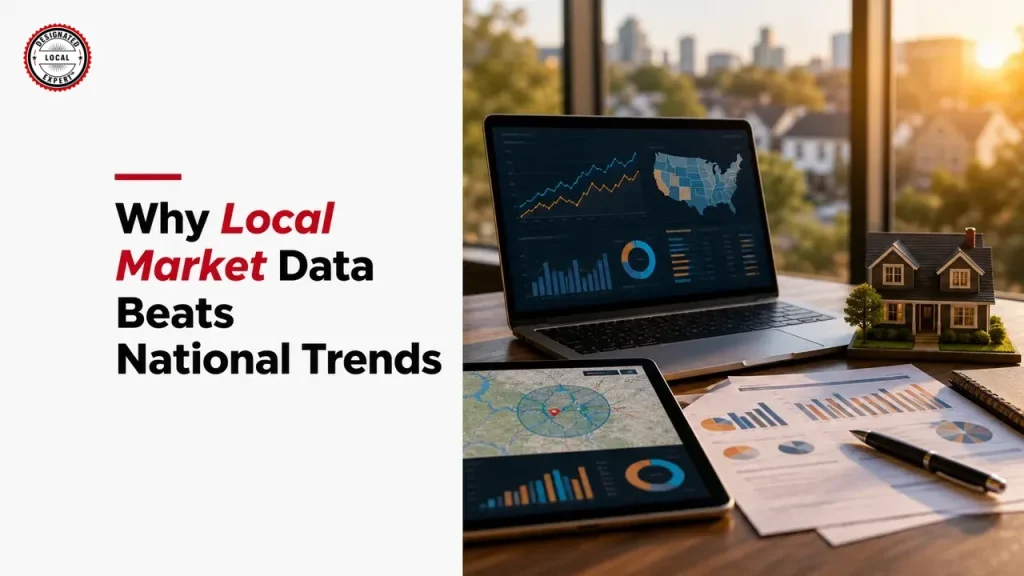
If you want to make a smart real estate move, why local market data beats national trends is a question worth asking early. National headlines can shape sentiment, but local numbers usually drive the real outcome for your price, timing, negotiating power, and overall strategy.
Table of Contents
-
-
- Why national headlines can mislead buyers and sellers
- What local market data actually includes
- Why local data matters more for home sellers
- Why local data matters more for buyers
- How a Designated Local Expert uses neighborhood-level insight
- National trends still matter, but only as background
- How to read local market data the right way
- Why DLE agents stand out in local markets
- Conclusion
- FAQs
-
Why National Headlines Can Mislead Buyers and Sellers
National real estate stories are useful, but they often flatten thousands of local markets into one simple headline. A report saying U.S. home prices are up 4% does not tell you what is happening on your street, in your school district, or in the exact price band where you plan to buy or sell. Here’s the thing: real estate is local by nature. A condo market in downtown Los Angeles can behave very differently from a move-up home market in Claremont or a coastal market in Huntington Beach. National data also tends to lag. By the time a broad report gets picked up by major media outlets, local agents may already be seeing shifts in showings, pricing pressure, seller concessions, and buyer demand.What Local Market Data Actually Includes
Local market data means the numbers and patterns tied to a specific city, ZIP code, neighborhood, school boundary, or even micro-area. It gives you a more accurate picture of what buyers are paying and how fast homes are moving right now. A Designated Local Expert will typically look at:-
-
- Active inventory
- Months of supply
- Median sale price
- Average price per square foot
- Days on market
- List-to-sale price ratio
- Pending sales
- Price reductions
- Seller concessions
- Absorption rate
-
Why Local Data Matters More for Home Sellers
If you want to sell my home for top dollar fast, pricing off national headlines can be a costly mistake. Sellers need to know what buyers are doing nearby, not what the whole country did last quarter. A local pricing strategy helps you answer questions like:-
-
- What did similar homes sell for in the last 30 to 90 days?
- How many competing listings are active right now?
- Are buyers paying over asking in this neighborhood?
- Which upgrades are getting a premium?
- How long are homes like yours taking to sell?
-
Why Local Data Matters More for Buyers
Buyers face the same issue from the other side. If you want to buy a home with a local expert agent, you need guidance based on what is happening in the exact neighborhoods you are targeting. Local data helps buyers:-
-
- Spot overpriced listings
- Recognize fast-moving pockets
- Understand realistic offer terms
- Avoid relying on stale list prices
- Find better value one neighborhood over
-
How a Designated Local Expert Uses Neighborhood-Level Insight
A Designated Local Expert does more than read stats. They connect the numbers to real buyer behavior, local inventory patterns, and street-level differences that broad portals often miss. For example, two homes may have the same square footage and bedroom count, yet one sells faster because it sits on a quieter street, feeds into a preferred school, or has a more functional layout. Local experts see those patterns every week. DLE agents stand out because they combine:-
-
- Neighborhood knowledge
- Pricing skill
- Local search visibility
- Buyer and seller attraction systems
- Consistent market monitoring
-
National Trends Still Matter, but Only as Background
National trends are not useless. They help you understand the bigger forces affecting affordability, financing, migration, and consumer confidence. As of May 2026, buyers and sellers are still watching:-
-
- Mortgage rate movement
- Inflation trends
- New construction levels
- Employment data
- Federal Reserve policy
- Regional population shifts
-
How to Read Local Market Data the Right Way
Not all local data is equally useful. A smart agent compares the right homes, in the right area, over the right time frame. Here are a few best practices:-
-
- Compare similar properties only
-
-
-
- Use recent sales first
-
-
-
- Watch pending sales
-
-
-
- Separate city data from neighborhood data
-
-
-
- Look for direction, not just snapshots
-
Why DLE Agents Stand Out in Local Markets
The DLE network is built around one core idea: local authority wins. Buyers and sellers want real answers from someone who knows the market firsthand, not canned advice pulled from a national headline. DLE agents are trained and positioned to attract clients through:-
- Real estate SEO for agents
- Google Business Profile for real estate agents
- AI-friendly local content
- City-specific pages and market updates
- Reputation building and review strategy