

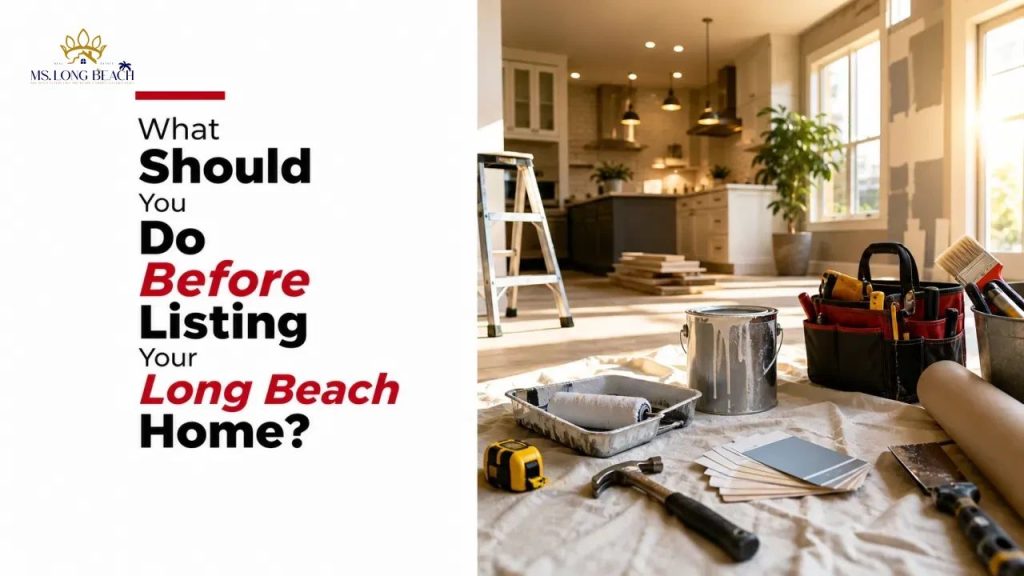
Before listing your Long Beach home, focus on five things first: price it correctly, fix obvious issues, improve presentation, gather seller paperwork, and choose a market plan that fits your neighborhood. In a city as varied as Long Beach, that prep work usually matters more than flashy marketing.
Long Beach isn’t one single market. A condo in Downtown Long Beach, a Spanish-style home in California Heights, and a coastal property near Belmont Shore or Naples can attract very different buyers and pricing expectations. As of August 2026, the median sale price in Long Beach was about $899,405, homes sold in around 43 days, and the market was described as somewhat competitive by Redfin. Realtor.com also reported homes selling at roughly 100% of asking price on average in August 2026. (redfin.com)
Why should you prepare your home before it hits the market?
Yes — preparing before you list usually helps you avoid price cuts, weak first impressions, and longer time on market. In Long Beach, where buyers compare homes closely by block, school area, and property condition, early prep can protect both your timeline and your negotiating position.
A lot of sellers think listing first and “fixing it later” saves time. Usually, it doesn’t. Buyers in places like Bixby Knolls, Los Altos, Wrigley, and Belmont Heights notice deferred maintenance fast, especially when several competing homes are already online. If your home looks unfinished, buyers often assume the unseen systems are in rough shape too.
Pre-listing prep also helps your agent tell a cleaner story. Instead of explaining away old paint, worn flooring, or a cluttered layout, your listing can focus on what buyers actually want: usable space, natural light, parking, storage, outdoor areas, and location advantages near the beach, 2nd Street, Cal State Long Beach, or major commuter routes.
What should you fix before listing a Long Beach home?
Fix the issues buyers notice in the first five minutes. That usually means paint, lighting, flooring touch-ups, hardware, landscaping, and any clear signs of water damage or neglect. You do not need to renovate everything, but you should remove easy reasons for a buyer to hesitate.
Start with visible and practical items:
- Repair dripping faucets, running toilets, and loose handles.
- Patch and paint scuffed or cracked walls.
- Replace burned-out bulbs and outdated light fixtures where needed.
- Clean windows, screens, and sliding doors.
- Address stained ceilings, damaged baseboards, or worn caulking.
- Freshen the front yard, porch, or entry sequence.
- Service HVAC if it hasn’t been checked recently.
In older Long Beach neighborhoods, especially historic areas like California Heights and parts of Wrigley or Belmont Heights, buyers may expect charm — but they still want evidence of care. The City of Long Beach identifies California Heights as the city’s largest historic district, with nearly 1,500 homes and a strong stock of period revival architecture. That means original character can be a selling point, but worn condition usually is not. (longbeach.gov)
How do you choose the right asking price in Long Beach?
The right asking price is based on recent comparable sales, current competition, condition, location, and buyer demand in your part of Long Beach. Pricing too high at the start often costs sellers more than pricing accurately from day one.
Here’s the hard truth: buyers watch new listings closely. If your home launches too high and sits, they start wondering what’s wrong. Realtor.com’s local reporting in 2026 pointed to the same pattern — more inventory gave buyers more options, while accurate pricing remained the clearest route to a timely sale. (realtor.com)
A smart pricing conversation should weigh:
- Recent sold homes, not just active listings
- Price per square foot in your micro-area
- Lot size, parking, and upgrades
- School and lifestyle draw
- Historic designation or architectural appeal
- Whether your home is turnkey, dated, or in between
Long Beach pricing strategy at a glance
| Pricing approach | What it can do | Main risk | Best use case |
|---|---|---|---|
| Aggressive high price | Leaves room to negotiate | Home sits, then feels stale | Rare homes with little competition |
| Market-value pricing | Attracts serious buyers quickly | May feel conservative to seller | Most standard resale situations |
| Slightly below market | Can create urgency and multiple offers | Underpricing if demand is weak | Highly desirable homes in strong pockets |
Long Beach buyers often shop by lifestyle as much as by bedroom count. A walkable location near Belmont Shore can command different attention than a similar-size home inland. And Downtown Long Beach condos play by different rules than detached homes in Lakewood-adjacent parts of the city. That’s why broad city averages help, but they should never replace neighborhood-level pricing. (redfin.com)
Which seller documents should you gather before listing?
Gather your disclosures, permit records, utility information, HOA documents if applicable, and a short list of upgrades before the listing goes live. Having that ready early makes the transaction smoother and helps buyers feel more confident about the property.
Most Long Beach sellers should pull together:
- Past improvement receipts
- Roof, plumbing, HVAC, or electrical records
- Permits for additions or remodels
- HOA rules, dues, and contact info for condos or townhomes
- Solar lease or ownership documents
- Termite reports, if completed early
- A list of appliances or fixtures that will stay
This step matters even more with condos and townhomes in Downtown Long Beach, Alamitos Beach, or Bluff Heights, where buyers often want quick answers about dues, parking, pet rules, and reserves. Delays here can slow escrow or weaken an offer that otherwise looked strong.
How should you get your Long Beach home ready for photos and showings?
Make the home feel clean, bright, open, and easy to picture living in. Professional photos work best when the house is decluttered, lightly staged, and stripped of distractions that pull attention away from the layout and features.
Before photos and showings:
- Remove excess furniture
- Clear counters and bathroom surfaces
- Put away pet items
- Open blinds where privacy allows
- Add simple greenery or neutral décor
- Hide cords, hampers, and personal paperwork
- Deep clean kitchens, baths, and flooring
Some Long Beach homes sell because of a specific lifestyle image. Maybe it’s a patio in Naples, a tree-lined street in California Heights, or proximity to 2nd Street shops and restaurants in Belmont Shore. Good prep helps those details come through. Bad prep buries them.
What neighborhood details matter most when listing in Long Beach?
The details that matter most are the ones buyers actually search for: neighborhood identity, school options, parking, commute access, outdoor lifestyle, and housing style. In Long Beach, hyper-local positioning can shape both demand and pricing.
Long Beach has distinct neighborhood identities, and the city formally recognizes many of them through planning and preservation resources, including California Heights, Belmont Heights, Wrigley, Bixby Knolls, and Naples-related coastal areas. (longbeach.gov)
That means your listing should clearly explain things like:
- Whether the home is near the beach, parks, or marinas
- Access to the 405, 710, or Pacific Coast Highway
- Walkability to restaurants, retail, or schools
- Historic character or updated modern style
- Garage, alley access, or limited parking realities
- ADU potential or lot utility where relevant
A seller in Belmont Shore should not market the same way as a seller in North Long Beach. Different buyers, different objections, different value drivers.
What step-by-step plan should you follow before listing?
Start preparing at least two to four weeks before you go live. That gives you enough room to make smart decisions without rushing repairs, photos, disclosures, and pricing.
- Meet with a Long Beach real estate agent for a pricing and prep walk-through.
- Review recent comparable sales and active competition in your neighborhood.
- Make high-impact repairs and skip low-return vanity projects.
- Declutter, clean, and stage the home for photography.
- Gather disclosures, permits, HOA information, and upgrade records.
- Set your pricing strategy and expected negotiation plan.
- Schedule photos, go live at the right time, and be ready for showings immediately.
That last point matters more than sellers think. Your first week on market is usually the strongest attention window. If the home is only “almost ready” when it launches, you can burn through your best buyers too early.
Final thoughts
If you’re asking what you should do before listing your Long Beach home, the short answer is this: prepare before you publish. Clean up the condition, price it with discipline, organize your paperwork, and market the home based on its exact neighborhood and buyer profile. That gives you a better shot at a cleaner launch and a stronger sale.
If you want help figuring out what to repair, what to skip, and how to position your property in the current Long Beach housing market, reach out for a local pricing and pre-listing strategy conversation.